Je suis le vent, l’eau, la montagne et les profondeurs qui t’habitent
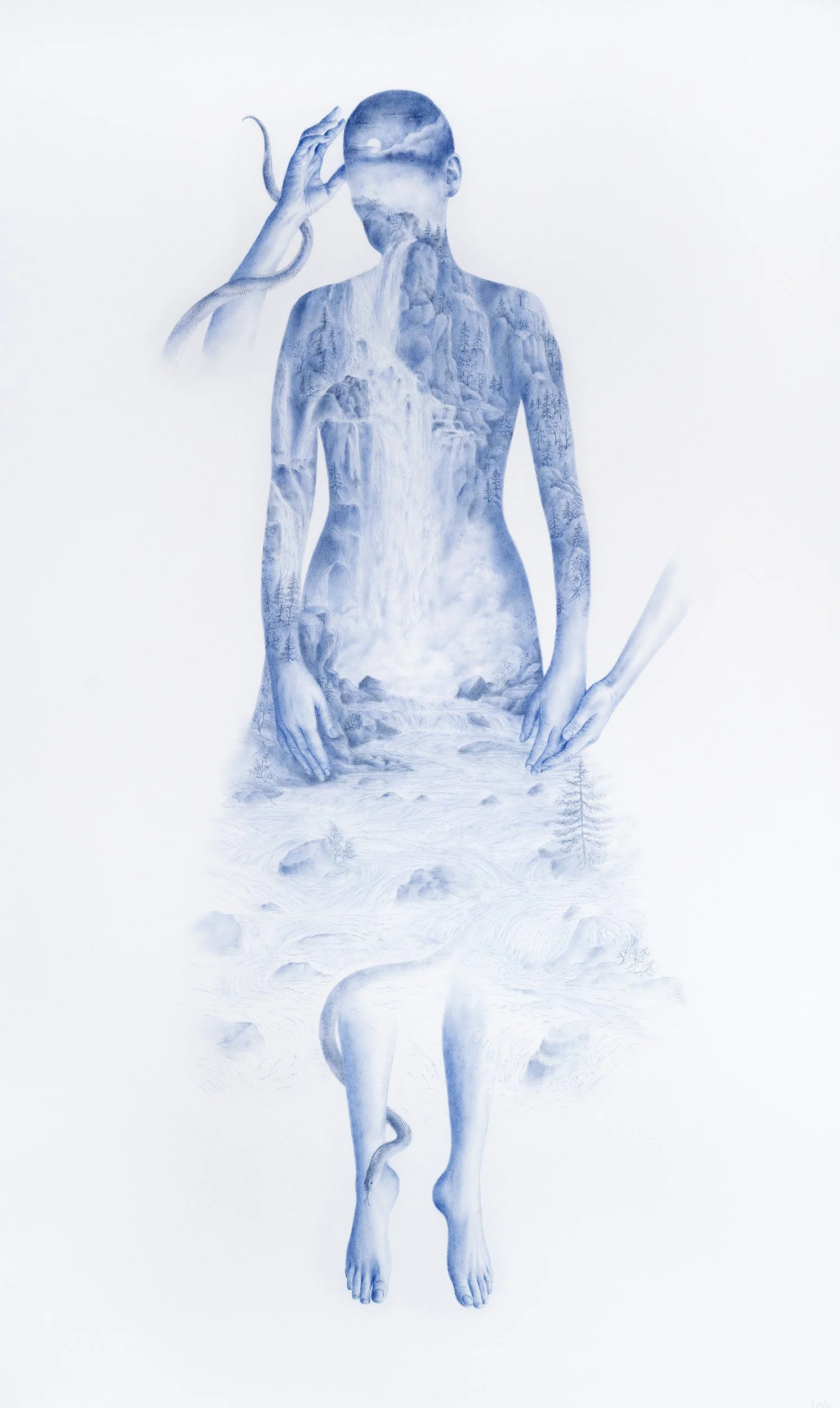
Dans la mythologie grecque, Styx est à la fois une Océanide, gardienne des serments des dieux, et la personnification du fleuve qui porte son nom. Aux confins de l’Hadès, le Styx marquait pour les anciens une frontière sacrée entre le monde des vivants et celui des morts. Ses eaux, à la fois craintes et vénérées, portaient des pouvoirs contradictoires : protéger ou détruire, rendre invulnérable ou dissoudre. Sa source était parfois imaginée dans une contrée rocheuse inaccessible, où une eau glacée tombait d’une haute falaise. Une tradition tardive l’imagine même comme un immense serpent enroulé autour du royaume des morts — une eau vivante qui enlace, garde et retient. Lieu de passage, le Styx ouvre sur un monde d’où l’on ne revient pas.
Cette installation réinvestit l’imaginaire de ce lieu antique et les questions qu’il transporte jusqu’à nous. Que deviennent aujourd’hui, dans un contexte marqué par des logiques de rendement et d’exploitation, les lieux symboliques et collectifs à travers lesquels penser la mort — et, par renversement, la vie?
In Greek mythology, Styx is both an Oceanid, guardian of the gods’ oaths, and the personification of the river that bears her name. At the borders of Hades, the Styx marked a sacred boundary for the ancients between the world of the living and that of the dead. Its waters, both feared and revered, were believed to possess contradictory powers: to protect or destroy, to grant invulnerability or dissolve. Its source was sometimes imagined in an inaccessible rocky landscape, where icy water fell from a high cliff. A later tradition even imagines the Styx as an immense serpent coiled around the realm of the dead — a living water that encircles, guards, and holds. As a place of passage, the Styx opens onto a world from which there is no return.
This installation reactivates the symbolic world of this ancient place and the questions it carries into the present. In a context shaped by imperatives of productivity and exploitation, what becomes of the symbolic and collective spaces through which we might think about death — and, by inversion, life?